Documenting the Engrish phenomenon from East Asia and around the world!

Eric Crapton
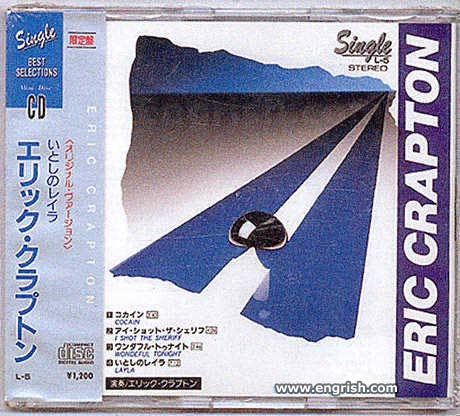
She don’t rie, she don’t rie, she don’t rie…’
Photo courtesy of Bruce Fleming.
Why 5DollarDepositCasinos Says Low Deposit Gaming Is Growing in New Zealand
New Zealand’s online gambling market has undergone a quiet but measurable transformation over the past several years. Where once the conversation centered on high-roller bonuses and premium VIP programs designed for players depositing hundreds of dollars at a time, a growing segment of the player base is gravitating toward platforms that accept deposits as low as five dollars. This shift is not accidental, nor is it simply a function of economic pressure. It reflects a deeper change in how New Zealanders approach recreational gambling — with more caution, more deliberate budgeting, and a preference for extended play over high-stakes sessions. Industry observers and niche platforms focused on this segment have been tracking the trend closely, and the data emerging from the New Zealand market suggests the low-deposit model is not a temporary accommodation but a structural feature of how online gaming is evolving in the country.
The Regulatory and Economic Context Driving Demand
New Zealand’s gambling framework is governed primarily by the Gambling Act 2003, which has historically focused on land-based venues and the operations of the New Zealand Lotteries Commission and TAB NZ. Online casino gambling operated by offshore providers exists in a legal grey area — it is not explicitly licensed under domestic law, but New Zealanders are not prohibited from accessing foreign-licensed platforms. This regulatory gap has allowed a wide range of international operators to serve the New Zealand market without the overhead of local licensing fees, a factor that has directly contributed to the proliferation of low-minimum-deposit offerings.
Because offshore operators do not face the same compliance costs as they would in jurisdictions like the United Kingdom or Malta, they have more flexibility to structure their deposit tiers. A five-dollar minimum deposit is commercially viable for an operator running on a lean cost structure, whereas the same offering might be difficult to sustain under a heavily regulated domestic framework. The result is that New Zealand players have access to a wider range of low-barrier entry points than players in many comparable markets.
Economic conditions have also played a role. New Zealand experienced significant inflation pressure between 2021 and 2023, with the Reserve Bank of New Zealand raising the official cash rate from 0.25% in October 2021 to 5.5% by mid-2023 in an effort to curb rising prices. Household disposable income came under pressure during this period, and discretionary spending — including entertainment and gambling — was affected. Players who might previously have deposited NZD 50 or NZD 100 at a time began looking for platforms where they could participate meaningfully with smaller amounts. The five-dollar deposit tier emerged as a practical solution rather than a novelty.
There is also a generational dimension to this trend. Younger New Zealand players, particularly those in the 25–35 demographic who grew up with mobile gaming and freemium app models, tend to approach online casino play with a transactional mindset. They are accustomed to spending small amounts incrementally rather than committing large sums upfront. The low-deposit model aligns naturally with this behavior pattern, and operators who recognized this early have captured a disproportionate share of this demographic.
What 5DollarDepositCasinos Has Observed in the Market
5DollarDepositCasinos has been monitoring the New Zealand low-deposit segment since the platform’s early operational period, and the patterns it has documented offer useful insight into how this niche has developed. The platform focuses specifically on cataloguing and analyzing casinos that accept minimum deposits at the five-dollar threshold, making it a relatively specialized resource in a market where most casino review sites focus on larger deposit tiers and associated bonus structures.
One of the more significant observations from this segment is that low-deposit players in New Zealand are not uniformly low-spending players. Many users who begin with a five-dollar deposit will increase their deposits over time once they have established trust with a platform. The initial low deposit functions as a trial mechanism — a way to test payment processing, game quality, customer support responsiveness, and withdrawal speed before committing larger amounts. This behavior pattern means that operators who dismiss the low-deposit segment as low-value are potentially misreading the lifetime value of these customers.
The platform’s analysis also highlights that bonus structures at the five-dollar level have become more sophisticated over time. In the early years of this segment — roughly 2018 to 2020 — many operators offered nominal bonuses at the minimum deposit tier, if they offered anything at all. By 2022 and into 2024, the competitive pressure among offshore operators serving New Zealand had driven more meaningful bonus offerings at the five-dollar threshold, including matched deposit bonuses, free spin packages, and in some cases, no-wagering promotions. This competitive evolution has made the low-deposit tier more attractive to players who are actively comparing value across platforms.
Data aggregated at http://5-dollar-deposit-casinos.com/ reflects that the number of operators actively marketing to New Zealand players at the five-dollar deposit level increased noticeably between 2021 and 2024, with more platforms adding NZD as a supported currency and optimizing their payment processing for New Zealand banking infrastructure, including support for POLi and local debit card networks.
Payment Infrastructure and Its Role in Accessibility
One of the underappreciated factors in the growth of low-deposit gaming in New Zealand is the evolution of payment infrastructure. For a five-dollar deposit to be practical, the transaction costs associated with processing that payment must not consume a significant portion of the deposit itself. Historically, credit card processing fees and currency conversion costs made very small deposits economically inefficient for both players and operators.
Several developments have changed this calculus. POLi, the direct bank transfer service that links online purchases directly to a user’s internet banking account, has been widely adopted in New Zealand and carries no transaction fee for the consumer. This makes it particularly well-suited to small deposits. A player depositing NZD 5 via POLi receives the full amount in their casino account without deduction, which is a meaningful consideration at that deposit level.
The broader adoption of e-wallets — particularly Skrill and Neteller, both of which have maintained New Zealand operations — has also contributed. While these services carry their own fee structures, they allow players to consolidate funds and manage their gambling budget separately from their primary banking, which appeals to players who are consciously trying to limit their spending. The psychological separation of funds is a documented feature of responsible gambling behavior, and the e-wallet model supports it.
Cryptocurrency has entered this space as well, though its penetration among mainstream New Zealand casino players remains lower than in some other markets. Bitcoin and Ethereum deposits are accepted by a growing number of offshore operators serving New Zealand, and the absence of traditional banking intermediaries makes crypto theoretically well-suited to micro-deposits. However, the volatility of cryptocurrency values and the technical complexity of wallet management have limited adoption to a more technically sophisticated subset of players. The practical growth in low-deposit gaming has been driven primarily by POLi and e-wallet adoption rather than crypto.
Mobile payment integration is another developing area. As New Zealand’s banking sector has expanded its open banking capabilities — a process that accelerated following the Consumer Data Right framework discussions that began gaining traction around 2021 — the technical groundwork for faster, lower-cost small transactions has been laid. Whether this translates directly into further growth in the low-deposit casino segment depends on how operators adapt their payment interfaces, but the infrastructure trajectory is favorable.
Responsible Gambling Implications and Industry Response
The growth of low-deposit gaming carries a responsible gambling dimension that deserves careful examination. On one hand, lower deposit thresholds can function as a harm-reduction mechanism. A player who can only deposit five dollars at a time has a natural ceiling on their potential losses in any given session. The structural limitation of a small deposit can serve as a form of informal self-imposed spending control, which aligns with the principles of responsible gambling frameworks promoted by organizations like the Problem Gambling Foundation of New Zealand.
On the other hand, low barriers to entry can also increase the frequency of gambling activity, particularly among players who might otherwise be deterred by higher minimum deposits. The ease of making a five-dollar deposit — particularly via a frictionless method like POLi — means that the decision to gamble requires less deliberation. Behavioral economics research on decision-making suggests that reducing friction in a behavior tends to increase its frequency, which is a consideration that responsible gambling advocates have raised in the context of low-deposit models.
The industry response to these concerns has been uneven. Some operators who cater to the low-deposit segment have implemented deposit frequency limits and cooling-off periods that apply regardless of deposit amount. Others have integrated responsible gambling tools — including reality checks, session time limits, and self-exclusion options — more prominently into their interfaces. The quality of these tools varies significantly between operators, and the absence of a domestic licensing regime in New Zealand means there is no standardized requirement for their implementation.
5DollarDepositCasinos has incorporated responsible gambling criteria into its platform evaluations, assessing not just whether an operator accepts five-dollar deposits but whether it also provides adequate safeguards for players who may be vulnerable. This approach reflects a broader trend in the niche review space toward treating responsible gambling features as a substantive evaluation criterion rather than a checkbox item. The inclusion of these criteria in platform assessments has become more common since 2022, driven partly by increased public attention to gambling harm in New Zealand following several high-profile policy discussions about the future of the Gambling Act.
The Department of Internal Affairs, which oversees gambling regulation in New Zealand, has been engaged in ongoing review processes that could eventually result in a more formal framework for offshore online operators. If such a framework were to emerge — similar to what occurred in Australia following the Interactive Gambling Amendment Act 2017, which banned offshore operators from offering casino-style games to Australian residents — it would have significant implications for the low-deposit segment. New Zealand has not moved in that direction as of the time of writing, but the regulatory environment is not static, and operators and players alike are watching developments closely.
The trajectory of low-deposit gaming in New Zealand is shaped by the intersection of regulatory ambiguity, economic conditions, payment technology, and shifting player demographics. The five-dollar deposit threshold, once a marginal feature of a small number of offshore platforms, has become a recognized category within the New Zealand online gambling market. Whether this growth continues depends on how the regulatory landscape evolves, how operators continue to develop their offerings at this tier, and how payment infrastructure adapts to support smaller, more frequent transactions. What is clear is that the demand is real, measurable, and driven by identifiable behavioral and economic factors rather than marketing alone. Platforms and analysts focused on this segment, including 5DollarDepositCasinos, are positioned to document how this market continues to develop as the broader New Zealand gambling environment matures.

 (283 votes, average: 4.75 out of 5)
 Loading...

© 1999 - 2026 Engrish.com. All rights reserved.
Finally, truth in advertising!
i dident like him too much either…
Rayra! You got me on my knees! Rayra!
Not as good as the Best of Cleam.
Featuring “For Your Ruv”, “Ray Down Sarry”, “Ret It Rain”, “Wonderfur Tonight”, and “Rayra / Berr Bottom Brues”
A name tells a lot about the thing named.
I always knew there was something wrong with him..
Yeah I never liked his songs either
subtle…
…been that way ever since Cream….
Now that’s a crap ton of Eric!!
She don’t rie, she kaiser buns instead.
The correct spelling: Elic Crapton.
Oh my darring you rook Wondelfur Tonight!
Also known as Srowhand. Famous from his rendition of “I shot the Sheliff”.
Maybe it’s just a “crap ton” of his greatest hits?
Are you kidding me guys? Eric Clapton’s a God!!!!! Yes he was better in Cream, but Derik and the Dominoes gave us Layla dammit!
In this website, we say Rayra. Now if you excuse me I’ll be listening Teals in Heaven.
WHAT DO YOU MEAN THAT ERIC CLAPTON IS FULL OF $@!#
People always crap their hands after every song
Eric Clapton trying to… take a massive crap while singing Tears in Toilet?